This isn't a philosophy I arrived at — it's simply how I have always lived, and my practice is a natural extension of that.
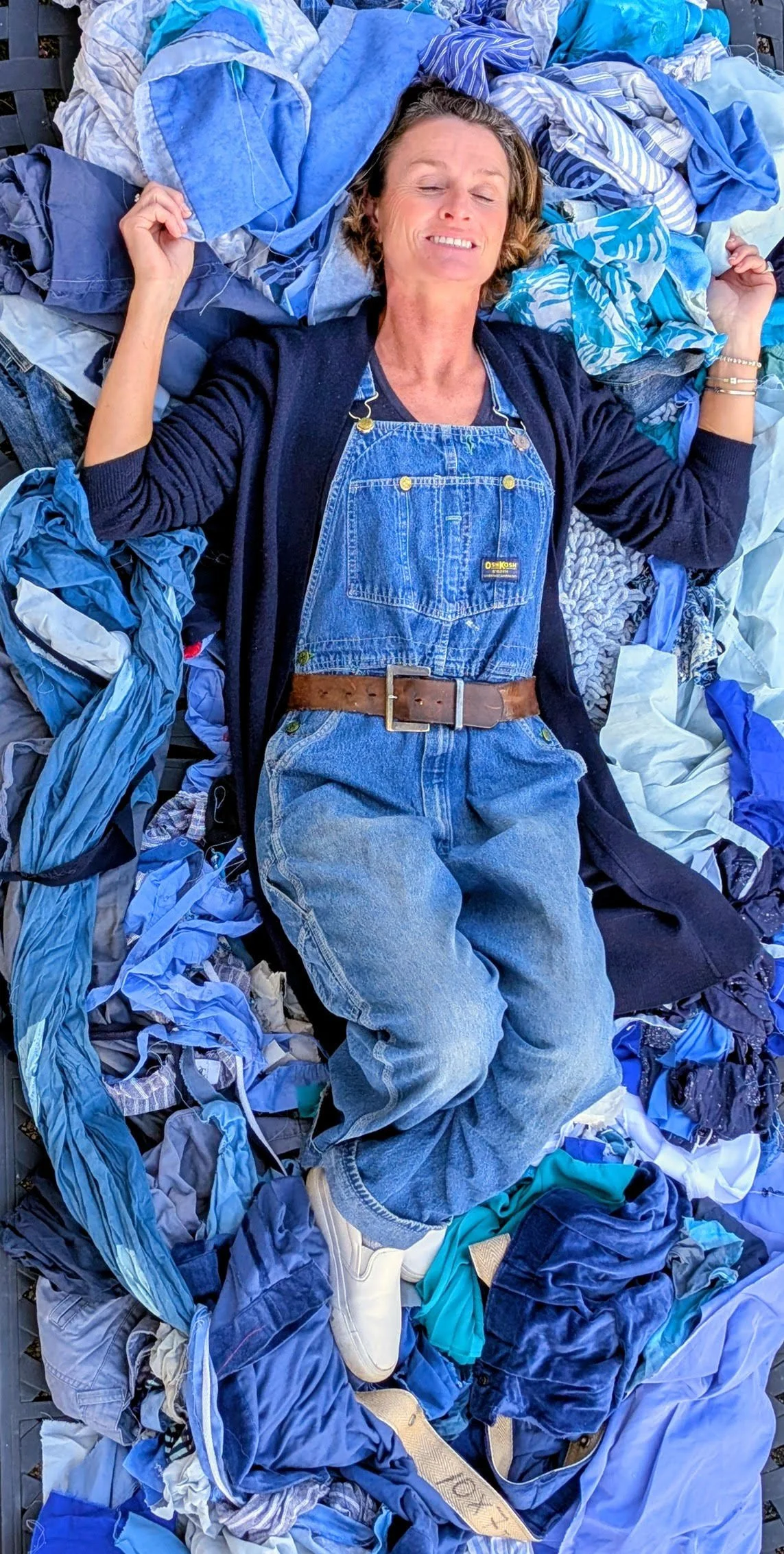
This is deeply personal to me. This isn’t a new way of thinking; I have brought up my family using second-hand clothes and furniture. It has been partly economic — you save a lot of money buying second-hand — and, of course, it is good for the environment. But I have been living this way for as long as I can remember, so it feels natural and intuitive. I only use reclaimed fabrics because I believe the materials we choose matter, and because I want my work to carry traces of lives, places, and histories already lived. I source my fabrics from charity shops, jumble sales, car boot sales, friends, family, and from the vast collection of materials that I have instinctively collected over the years. I am often drawn to what has been left behind, discarded, or overlooked. These materials have already had one life, and I value the visible evidence of that journey. The marks, fades, creases, and worn edges are not things to hide; they are part of the work’s truth. I celebrate these and use them as part of my process and they are crucial to composition.
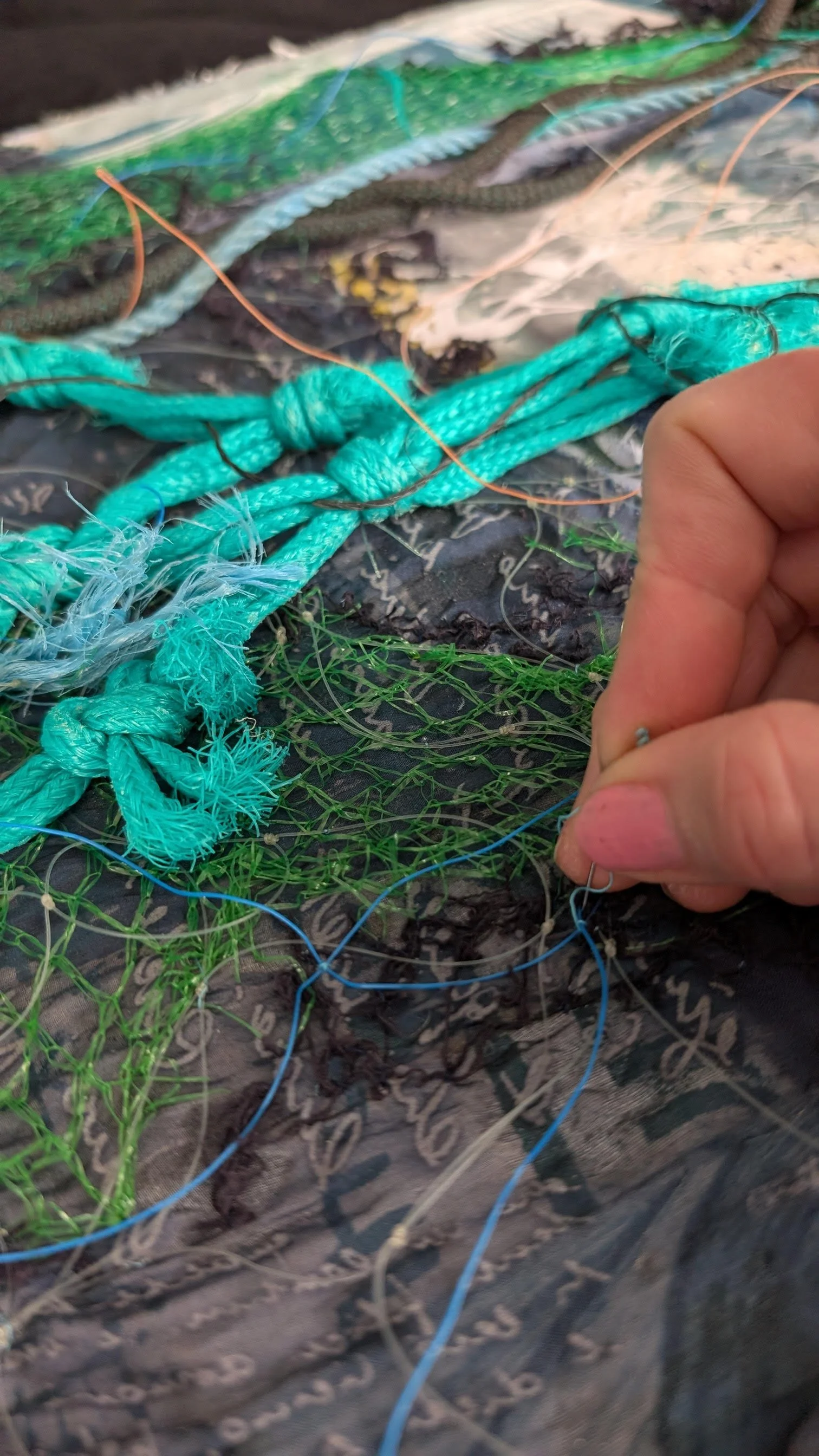
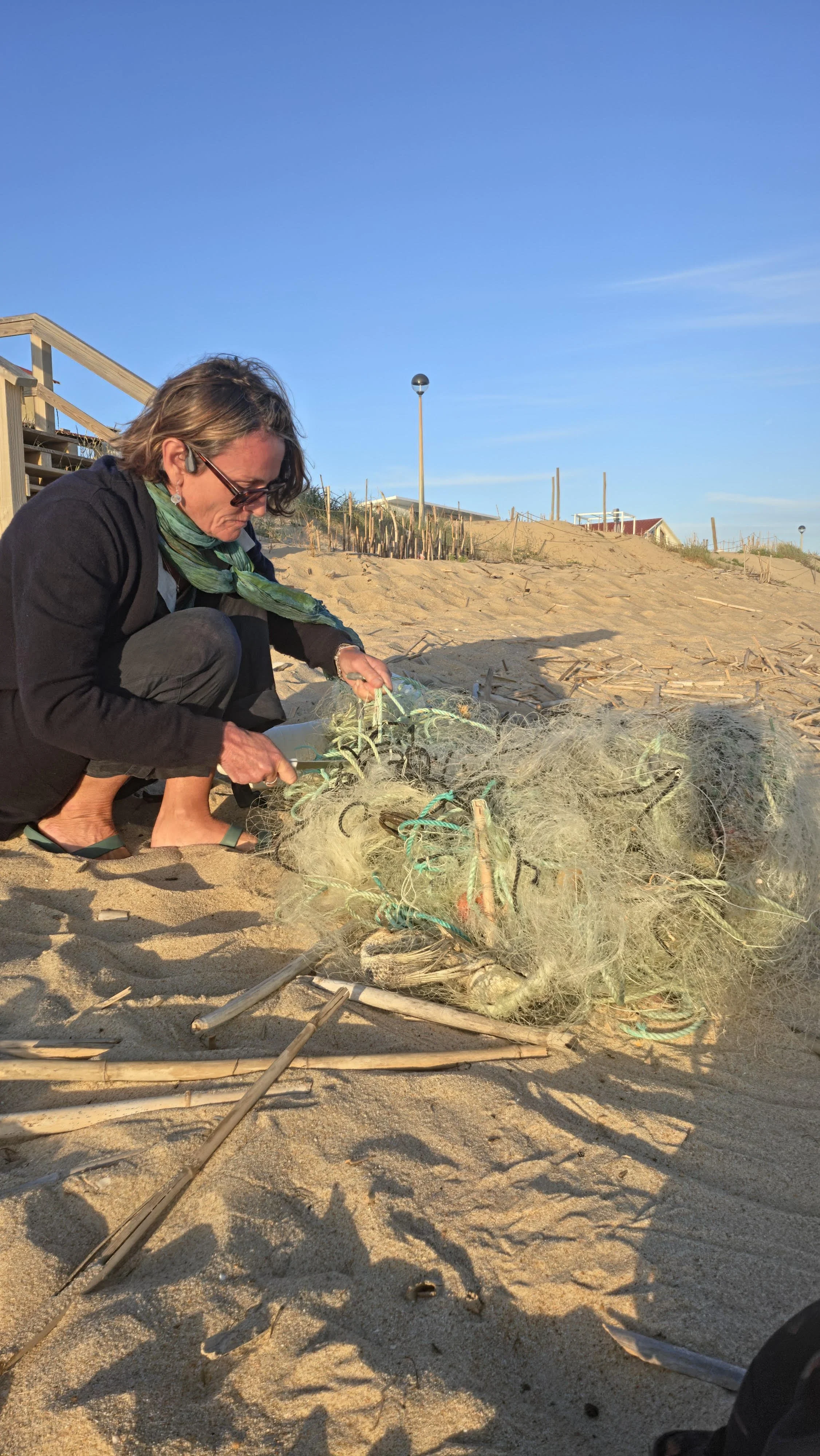
I’m interested in and embrace the imperfections: the creases, marks, and traces left by a fabric’s previous life. Rather than hiding them, I see them as part of the work’s character and strength. I love the threads left when a fabric is ripped; these, too, become a form of mark making, drawing with fibres. In this way, the material itself becomes a collaborator, offering texture, movement, and sometimes an unexpected direction. I find ghost gear and marine plastics through beach cleaning and just whenever I pass and see something overlooked and dumped…if I can I will pick it up and bring it home. The first ball… and it was a big one of ghost gear I found was collected over 15 years ago… I didn’t know what I wanted to do with it, I just knew I had to have it and the beach looked better without it. These marine plastics are very much a part of my practice, using their unexpected forms, the quality of their lines and surfaces help me to bring contrast, tension, and meaning. I’m also drawn to their unexpected beauty as visual elements, using them to draw with and to add detail and layers. They are visually compelling, but they also carry a difficult story. Their presence in the work reminds us that what we throw away does not disappear. It remains in circulation, returning to our shorelines and our ecosystems in altered forms.
By placing these materials into my work, I am able to respond directly to the environmental issues I care about while also creating something visually layered and alive. For me, these materials make the work richer, not harder, though they can be difficult to work with. Their worn edges, faded colours, and layered textures bring depth, character, and a sense of time that cannot be manufactured and as we approach an apparent tipping point… incredibly important. I am interested in the tension between beauty and environmental grief, between the seduction of a surface and the reality of what lies beneath it. My practice is a way of holding both those things at once. I want the work to draw people in, people often say “ oh wow I love the colours, amazing textures.. oh wait what is this… fishing nets?” I also hope to make a viewer pause and think about what we value, what we waste, and what continues to return to us when we think it has gone away. My practice also aligns closely with the Rs of environmental stewardship: reduce, reuse, recycle, and refuse, and repair, recover, or repurpose something I have always lived by and doing so with my work feel like a natural and obvious extension.. to make work that will inspire and gently raise an awareness, start a conversation.